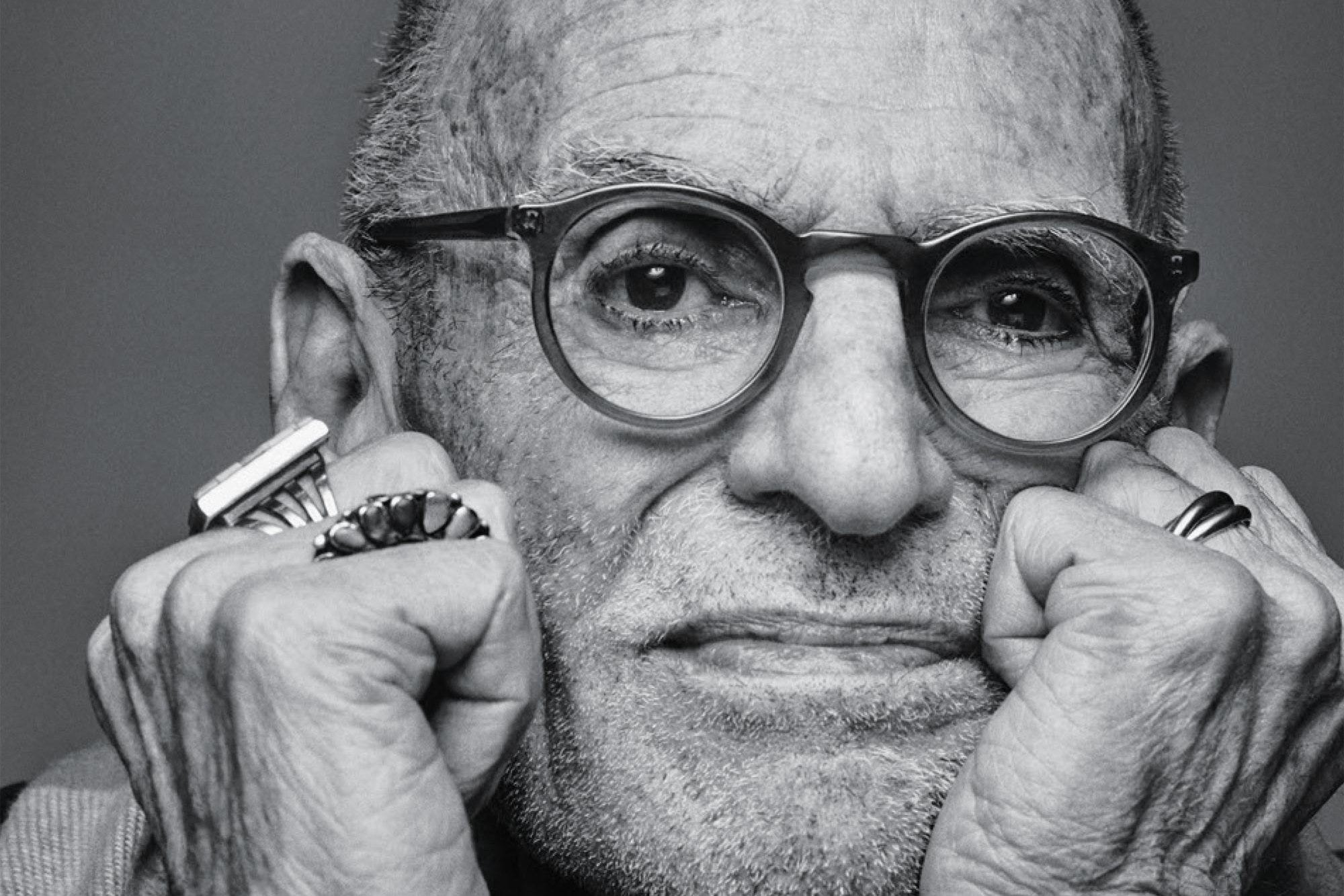
We're Still 'Faggots'
Reading Kramer in Pride month


(Rather listen? Press ‘play’ above.)
In Junes past, I’ve written columns about gay mentors, gay history, or my observations about current gay culture (and how straight people should and should not navigate Pride), but this year I’m offering a critique, a criticism, perhaps even a dressing-down of the gays in my ongoing hope that one day we’ll grow up.
The subject of gay grown-ups first pricked my interest twenty years ago, when at 29, I read gay therapist Don Kilhefner’s article on the subject for the now-defunct gay spirituality magazine White Crane Journal. It’s a topic I’ve chewed on, often frothing at the mouth, for the past two decades as I’ve limped further and further into adulthood, and I was reminded of it as I re-read Larry Kramer’s Faggots, published in 1978 by Random House (can you imagine). Larry Kramer, before he became that Larry Kramer, the near biblical Jeremiah bellowing about plagues and a community bent on its own destruction, thereby aiding and abetting the straight world bent on its destruction, was a writer for screen and then, with the publication of Faggots, of a novel.
And not just any novel. This was satire in the tradition of Swift and Pope, even of Orwell, although the book’s darker auguries couldn’t have prepared Kramer for the hell realms ahead. Faggots was met with more than a little dismay and antipathy, something still reflected nearly fifty years later when, attempting to read John Birdsall’s What is Queer Food? How we served a revolution (good writing, bollocks premise), I read a section where that author came down hard on Kramer for making the gays feel ashamed of themselves and their behavior, something the activist did to save the very men who denounced him.
Faggots follows the trials of Fred Lemish on the eve of his fortieth birthday as he searches for love in hedonistic dens of gay New York. Kramer spares no one and no type, lambasting the shallow pursuit of pleasure for pleasure’s sake, flicking on the fluorescents in grimy bathhouses and Park Avenue orgies, shining a search light on the debauches of Fire Island beaches and the urinal cake-perfumed romances of a public bathroom. He’s not kind to the culture, but he is funny.
Beneath all of the criticism is a sense of love. You can tell Kramer cares for and frets about these people, this group, and his frustration at their stupidity and immaturity leads him to write about them with near-journalistic accuracy and rapier wit. But perhaps this is merely projection, because that’s how I feel about the gays. I love them. I wish they’d grow up, especially when it comes to sex and relationships. I’m tired of watching us destroy ourselves, our attempts at lasting happiness, our dwindling hopes for love snuffed out by bad decisions and worse psychology.
There’s a time to embrace and a time to refrain from embracing and that time is after thirty. Men over the age of thirty shouldn’t be ordering sex delivery like soy sauce-sopped General Tso’s chicken, shouldn’t be attending orgies, shouldn’t be joining an app called Sniffies (the name alone), while lamenting the lack of good men or their fear of age and loneliness. My position is not one of sexual prudery, although there will be some who accuse me of just that, but one of adulthood, of someone who thinks deeply about sex, its meaning, its soul-making, and what happens when sex is truly perverted.
Gays grow up in a world that hates us. Still. Yes, we’ve made incredible strides. No, we’re not done. No, those strides are not permanent. No, animus lasting thousands of years doesn’t vanish in a few decades. Part of that hatred is rooted in a sex-phobic attitude towards any physical intimacy and pleasure, but especially that between men (those roots mere tributaries to the taproot of misogyny), and resultantly, gays feel shame for their desires. When they come out, as they work through their shame in the realm of sex, they often want to do it all with everyone. It’s a blast. Good for us.
But instead of the Lothario life being just a phase, it warps into a reflex. A habit. An addiction. Pleasure no longer is pleasurable, or new heights of pleasure must be scaled in order to achieve the same thrill or any. It’s an app. It’s an alley. It’s a sex party. It’s (another) three-some with (another) unhappy couple. The defiance against shame and homophobia, a noble act at the beginning of the gay journey, becomes a prison because it chains us to that young self with all of his immaturities, that one who was trying to beat the odds and is now a sad, old queen trolling the sewers searching for gold when all they find is garbage.
In an incisive foreword to my copy of Faggots, author, poet, and scholar Reynolds Price writes, “It wouldn’t have taken a mind of Kramer’s quality to conclude that, whatever prodigies the male genitals can perform, the human mind is incapable of emotional focus when it’s asked to experience so much emotional intensity with so many different objects.”
Like it or not, a series of little black books buckling the shelf does not a sonnet sequence make.
Kramer himself writes in the voice of one of his characters, “Yes, sex and love were different items when he wanted them in one, and yes, having so much sex made having love impossible, and yes, sadism was only a way to keep people away from us and masochism only a way to clutch them close, and yes, we are sadists with some guys and masochists with other guys and sometimes both with both, and yes, we’re all out of the closet but we’re still in the ghetto and all I see is guys hurting each other and themselves.”
I’ve known gay men into their forties, fifties, sixties, and even seventies who say we shouldn’t have to deny ourselves any sexual experience in favor of a relationship, or that we don’t have to play by straight rules in how we order our marriages, or monogamy is unnatural (tell that to wolves, eurasian beavers, and 90% of bird species), and yet they balk when their license lands them lonely. All of these are excuses, political posturing merely.
Kramer goes on: “But how to get out! And yes, the world is giving us a bad name, and we’re giving us a bad name and one of us has got to stop and it’s not going to be the world.”
We’ve got to grow up, not just come out. Gay men continue to founder, near fifty years after Kramer’s book, and until we get our sexual selves together, we’ll never activate what we’re truly capable of. Even more than in the post-Stonewall era, men now are just sexual objects to each other, the apps insuring that not even a conversation or chemistry are necessary to hooking up, “Hey” and “Sup” being the salutations in that digital meat rack. Gay men have dropped all pretense of safe-ish sex since the advent of PrEP, the HIV prophylaxis drug, as if syphilis, gonorrhea, chlamydia, and an alphabet soup of other diseases had evaporated, as if HIV and AIDS taught us nothing about sexual health and, more importantly, about love.
And so gay men keep on trying to fill that hole, and I’m talking about the one in their hearts, by means of other orifices, but once the paramour pulls out, the heart still aches, so instead of going on a grand adventure in service to that most tender and miraculous organ, too many gay men move on to the next sexual encounter, upping the ante with higher and, at the very least emotionally, more dangerous behaviors, or in Kramer’s words “arcane sexual deviances sacrosanct to the unloved.”
And it’s that last bit that matters most – the unloved – because what I’ve learned that most gay people, hell, what any people, want is love, not only to be loved but to love another, and this is what I wish for my friends and community. I want them to find love and to be grown up enough to keep it.
More to come…