
New York Stories
Summer in the City

(Rather listen? Press ‘play’ above.)
New York grants days that unfold unexpectedly; sometimes an unseasonable tiger lily, sometimes an ill-omened corpse flower, it always delivers something to talk about with friends.
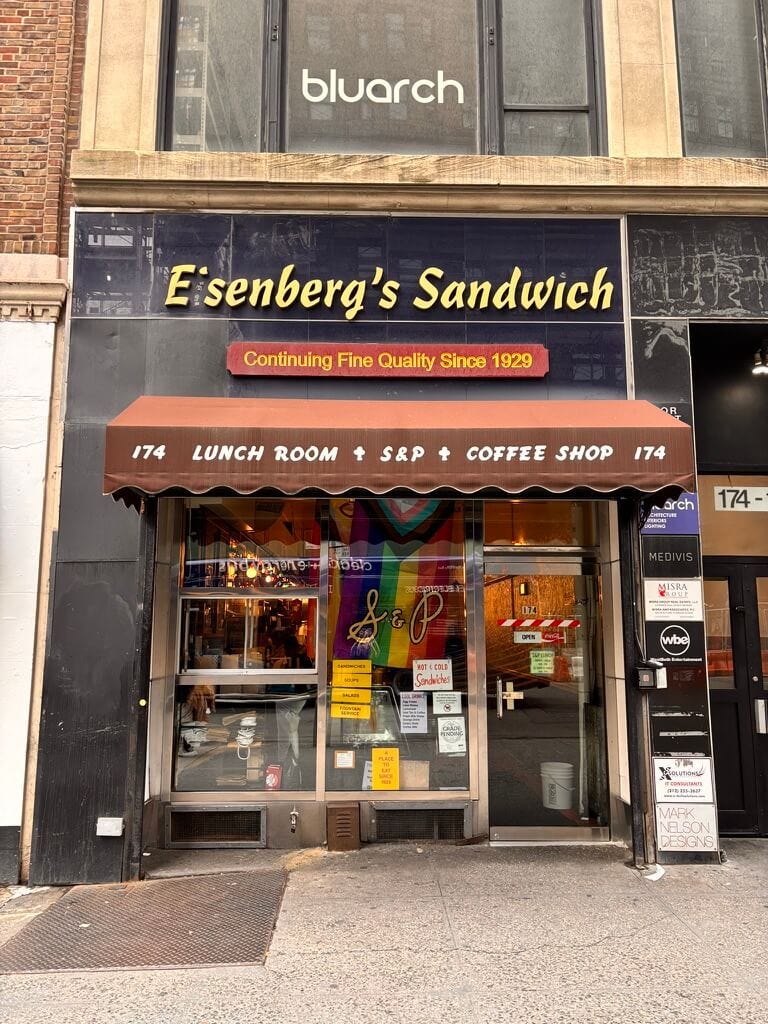
After watching a video from the New York Times Cooking Section on YouTube, part of their Sandwich City series, I took a cab on a sweltering day to Eisenberg’s/S&P, a not-so-greasy spoon near the Flatiron building. Opened in 1929, the diner today features the original counter, original booths, even the original coat hooks on the walls, and although the menu has changed, especially under new ownership since the pandemic, it maintains an idealized midcentury flavor profile without the stifling and often revolting palate of 1950s America. (Under no circumstances are Jell-O or mandarin oranges appropriate, and their combination is downright unholy.)
On my first visit, I ordered the tuna melt. Nothing could be more disgusting in prospect – fish & cheese (along with cursing your mother, the only other unpardonable sin of Italy), and then there’s primal horror of hot mayonnaise – but it was perfection. The flavor, the consistency, the crisp of the rye bread contrasting with the soft interior. Heaven. As was the pastrami, brined overnight and thick-sliced – none of those raggedy shreds hanging from the bread like a dead man from a gibbet. And the fries? Sliced into coins, they were the love child of a ruffled potato chip and pommes frites. I’ll likely be going back regularly, which might not be the best caloric choice, but as we slide further into fascism, I, like Bruegel’s mad carnies, choose to dance instead of repent.

A dear friend of mine who also moved to the city in the past few years lives close by, and we meet regularly for a coffee, a w(h)ine, or a walk in Central Park, the latter choice being a time to watch hot men run shirtless beneath the trees. Between ruminations on maturity and politics, our deeper dialogue is momentarily derailed by approbation or critique (“Anytime, anywhere;” “Rough trade, but that has its place;” “Yes, I want more;” “I want less”). The other day, during our perambulation, crossing a bridge seen in every New York movie, I was intrigued by a very tall person dressed in long, dingy, dun-colored fabrics, stooped like Baba Yaga at her oven. We got closer and, beneath a curtain of lank hair, I glimpsed a face mostly covered by a covid mask that may have been jerry-rigged from a scarf or a pair of dirty underwear, but what grabbed me most was that this personage clutched a pet carrier. Naif that I am, I bent down slightly to peer inside and almost said, “Ooooh, who’s in here?” when the visual answer made me straighten up, turn away, and laugh, semi-hysterically.
Garbage. Mostly empty water bottles. Scraps of greasy, crumpled paper. This was not the pet carrier to coo over.
Finally, this week I went to the IFC for the documentary Mary Oliver: Saved by the Beauty of the World, a look at the famed poet, her life, her work, her latter-days success and celebrity of a sort achieved by so few poets in the modern era. Perhaps only Allen Ginsberg or Maya Angelou come to mind, all writers so different from each other, but similar in their cultural impact.
I first heard Oliver’s work, as so many have, in a yoga class. I’m not sure when she became the author for those lying down, relieved, in a sticky room after contorting themselves into circus shapes. “Wild Geese” was that inaugural poem, one of her most popular, and I bought a collection of her work. What I found inside was impeccable linguistic skill and a vision of the world I understood, perhaps had even thought about in my own way, the poems often evoking a gasp of surprise at their conclusion but also the clear understanding that they weren’t going anywhere but there; they seem both startling and foreordained.
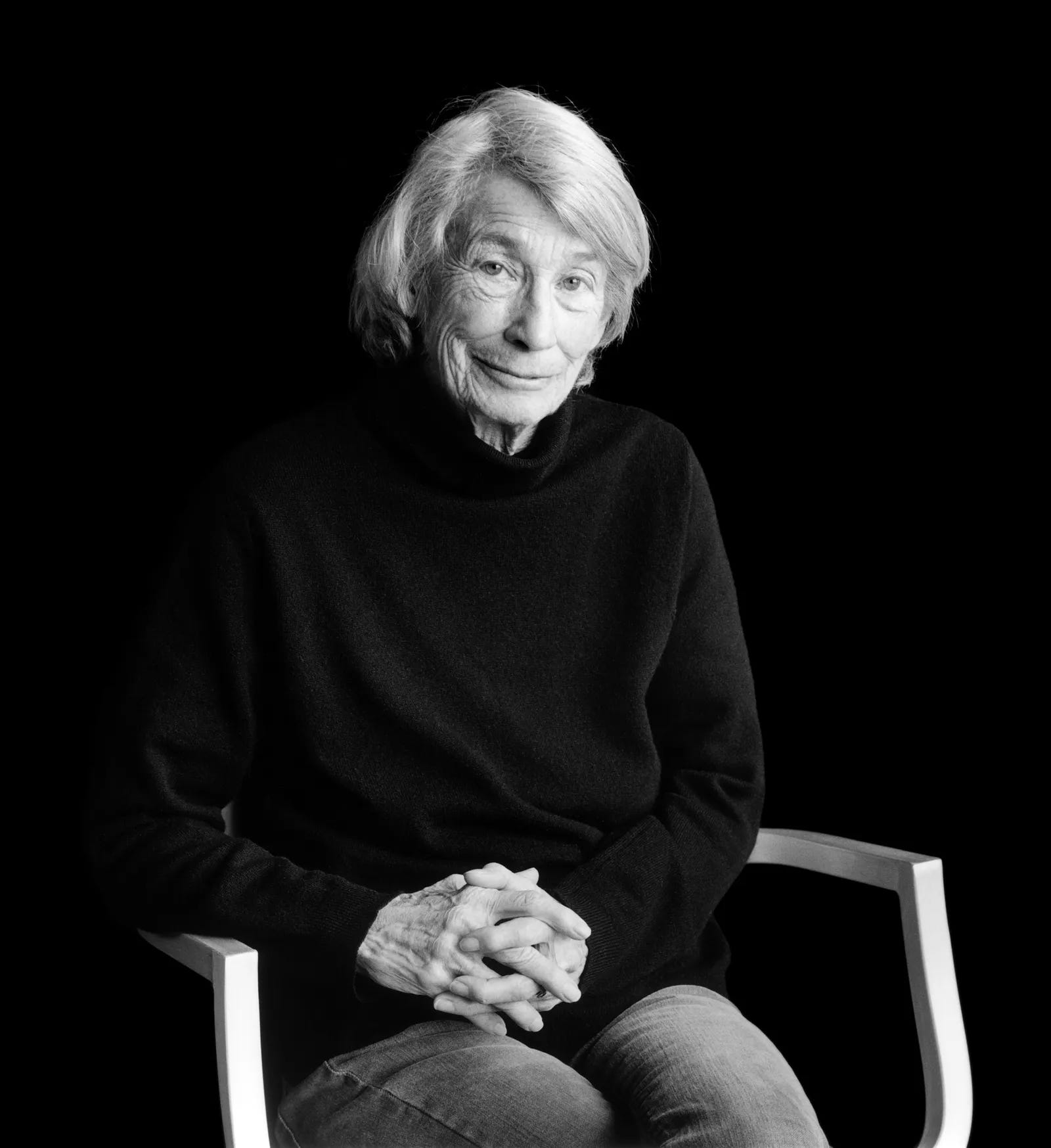
Oliver loved the natural world, and although often labeled a “nature poet” (labels a way for the uncreative to confine the artistic genius they grudgingly adore), her observations of the natural world became the medium through which she reflected upon her experience of life. She prized solitude because she was comfortable with herself and with the thoughts inspired by the attention she brought to seductive and murderous mushrooms, to vultures’ death-fueled wings, to the grasshopper’s jaws wild and precious. She knew that paying heed to what surrounds us manures the imagination.
She lived, for a brief period, in the Village, an exhilarating but burdensome place for a reclusive soul, and, in time, she moved permanently to Provincetown with her lifelong partner Molly Malone Cook. The city afforded her no peace, no silence for the clarity she found in the natural world, which, I suspect, is more a matter of temperament, than of locale. I find the city’s waves of people no less wondrous than the relentless tide upon the strand, its lights no less illuminating than the stars thrown across the sky like diamonds on the black velvet of an Orthodox jeweler, the klatch of old women gabbling about PBS no less melodic than the musical mutterings of starlings in a sycamore. Oliver’s oeuvre shows us that we do, indeed, have a place waiting for us in the family of things; all that stands between us and a sense of belonging is the self-generated busyness and false urgency that drags us from the lazy, yet contented, current of existence. Paradoxical to some, I can say New York assures us of the same promise, a recognition of camaraderie with everything around us. A quick conversation on a crowded subway with a stranger. The mother laughing with her child on the daily schlep to the grocery. The sensual pleasure of a dumpling devoured on the corner, a snap of dough, a spurt of unctuous flavor on the chin. The two guys on the street, one homeless, one not, celebrating the Knicks victory together.
With a little attention, the city, hell, the whole world, blossoms.
also saw this doc when I was there ugh
love!