Medieval Minds
If only we were as smart.

(Rather listen? Press ‘play’ above to hear yours truly read this week’s essay.)
Every Wednesday, I rush to the second floor of the New York Society Library, a reading room with wood panelling, a fireplace, damasked furniture, and shelves of classic works by Goethe, Balzac, Milton, and other great authors. The room is silent. You’re not even allowed to type on a computer there. It’s my idea of paradise, and it’s there, weekly, that I review the New York Times food section, one that has, like so much else with that periodical, lagged of-late in their attempt to capture the attention of a public intent on dumbing themselves down with every swipe, heart, and TikTok.
However, this week’s top article, originally published online on March 30th, The Dogma of Meat, caught my eye. Beef remains big business in the U.S. where Americans ate $45 billion-worth of it in 2025, up more than 10 percent from the previous year. The article details our love of beef, but more its meaning to our national identity of manfulness, versus the effete vegetable whose fibrous flavor signals effeminacy. The meat craze took off in the years leading up to and immediately after the Civil War, signaling that times of notable societal unrest inspires in us a longing for simple answers and pseudo-scientific flummery, something which we have in abundance now.
Paul Saladino, a trained psychiatrist with millions of followers on Instagram (and, natch, a line of beefy supplements to sell), declares eating lots of meat and cooking with beef tallow bypasses the need for sunscreen or even toothpaste. Influencer Anthony Chaffee, who has a bachelor’s in medicine from the Royal College of Surgeons in Dublin and practices in Australia, has said eating salads over the course of a lifetime is akin to smoking cigarettes. Other self-appointed authorities with a devil-quotes-scripture attitude use science-like terms to make their point, further muddying the cow pond.
We long-ago entered a time where experts earned our suspicion, not our respect, something that is not altogether undeserved; after all, when those scientific authorities are taking money from corporations who stand to gain by a certain finding, how are we to trust them? Yet we’ve replaced our skepticism with something we had before the alleged Age of Reason: faith. There’s something in us that craves blind belief, even among obstreperous atheists who object to a mystical version of it, and in this time of gross propaganda, capitalistic hegemony, and possession of our minds by technology, we’ve become modern versions of medieval pilgrims buying relics from charlatans.
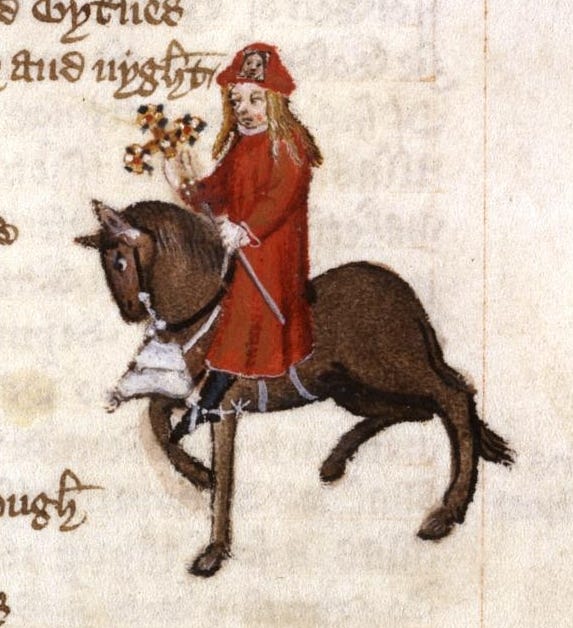
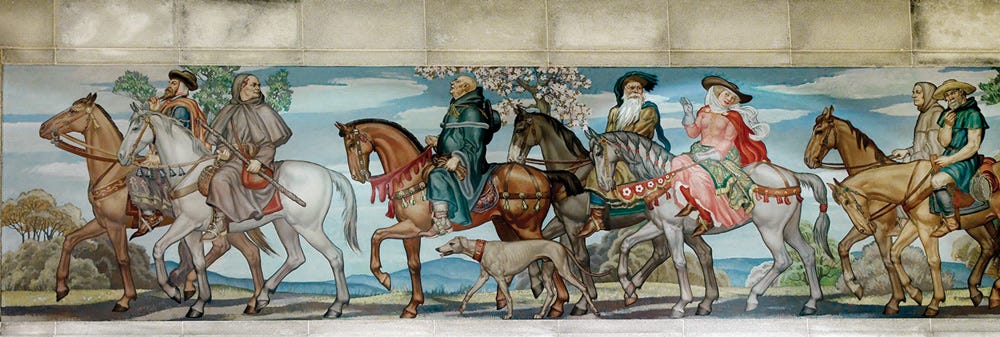
Perhaps the best literary reference for this lies in Chaucer’s Canterbury Tales, specifically in the words of the Pardoner. A group of people on a pilgrimage to the holy site of Canterbury propose they while-away their time there-and-back by telling stories, and the Pardoner, a clergyman who preaches and then offers pardon for sins, is one of the more memorable characters (possibly outdone by the raucous Wife of Bath). He always preaches on the same theme: Radix malorum est Cupiditas, greed is the root of all evil. Confessing his trickery to his traveling companions, he tells them how he gets the great unwashed to buy the papal pardons and junk relics he carries with him (e.g. a shoulder bone of a “holy Jews’ sheep,” that promises to heal body and mind of all ills), thereby filling his purse while emptying theirs. Not one to live in willful poverty like a monk, instead he spends his energy fleecing the faithful flock (or, as H.L. Mencken wrote of evangelist Aimee Semple McPherson, “haranguing the morons nightly, under canvas”), declaring he will have money, wool, cheese, and wheat, even if it were given by the poorest page or poorest widow in the village, should all her children starve for famine. The Pardoner goes on to tell a story, one he likely employed countless times in countless churches to secure his coppers, and, even after his opening remarks about his true motives, come the tale’s end, caught in the spirit of his habit, he offers absolution for a fee to the pilgrims.
Much like our modern mountebanks, the Pardoner has the gall to show his hand and then attempt to conceal it behind religious legerdemain. The pilgrims, wise to his game, don’t give him a ha’penny, so what is wrong with us, so modern, so advanced, so far beyond the savage simplicity of the Medieval era that we can’t do the same?
We’ve been told by the fraudsters (starting with the president) that they’re purposefully obfuscating facts in favor of gain, and yet we fall in line. We disbelieve our own eyes and ears, choosing instead, through liberal piety or conservative outrage, to champion what we’re told by figures that have built a near-clerical wall of infallibility around themselves.
Sometimes these figures are political, like Cadet Bonespurs and Secretary of the Small Member, Hegseth. Sometimes, they’re technological or corporate, like Sam Altman, who asks us to trust him despite his track record. Sometimes they’re the yoga practitioner who says eating alliums is too stimulating to the soul’s march towards enlightenment (I’ve actually met people like this). They’re the health fanatics, convinced the body isn’t designed to be unhealthy ever or break down over time, the same ones who wouldn’t wear masks during the Covid pandemic because their immune systems thrived on sunshine and turmeric. They’re the people who say they’re actually a different gender than the physical evidence demonstrates and demands we all treat them as something unseen. Each of these is a strange, secularized act of faith, whereby we refuse the factual for something accepted on the near-religious word of a huckster.
Perhaps, if we read our Chaucer, we’d remember that the leader of the pilgrims, approached by the Pardoner to open his purse, to spend some money and gain access to kiss his relics, rebukes the swindler. Perhaps, like people in another age of blind faith, we could find our good sense, god-given or not.
Nay, nay, it shall not be so, I swear!
You would have me kiss your old underwear,
Professing it's the relic of a saint,
While all along, it's just your dirty taint!
(My translation, but honestly, Chaucer had a potty-mouth.)