
Masc for Masc
And nary a grown-up to be found

(Rather listen? Press ‘play’ above.)
Harvey Weinstein. Matt Lauer. Jeffrey Epstein. The current president. Each is a worn-out paragon of toxic masculinity, that somewhat nebulous and scattered term which includes everything from scolding a boy for crying to, when he’s older, rewarding that boy for sexual assault; from rampant egotism in the boardroom to rampant egotism in the halls of government (Hegseth, I’m looking at you, and you, Rubio, and you, Patel, and…oh, never mind). It’s an appellation and an insult applied most readily to straight men, but gay men are not immune to the charge, especially when it comes to the sexual obsession, compulsion, and disconnection among gay men.
This Pride month I’ve been doing a deeper dive on the arcane psycho-sexual flaws of the gays, a group which I love but which also vexes me, especially for their pathological unwillingness to grow up. Nowhere is this more potent than in the sexual world, perhaps the only place where gay men are on the same page (saying we have a “culture,” while applicable in micro-groups, is far too swampy a designation to employ with any surety).
According to an article written for the Anxiety and Depression Association of America, toxic masculinity features three themes that give rise to a variety of destructive and self-destructive behaviors: toughness, anti-femininity, and power. Boys are taught to be hard and unfeeling, softness and emotions being the weakness of women, and thereby gain (and, against all odds, keep) power. One can translate these themes into the world of gay men, a translation that garbles the practices of straight men into a gay idiom, whereby the toxicity remains, as do its pernicious results, notably a status bestowed for a period of time, but at the cost of maturity, rich interactions, and love.
“Men are strong, aggressive, and emotionally hardened,” writes Kevin Foss, the author of the aforementioned article, and in the gay sexual demimonde, where tricks are reckoned among friends like scalps among braves, there’s an outwardly laissez-faire attitude toward sex. It’s not uncommon for gay men to ask one another what their “body count” is, a cheeky turn of phrase and a revelatory proof of the user’s own psychological outlook on intimacy. The stink of death pervades the term, because those who gloat over their tally are, indeed, dead. Instead of embracing sex and intimacy as an invitation to life, they’ve reduced it to an act with a mortal tang, an emotional necrophilia. Men are there to be used and tossed aside – another person whose name and face can’t be recalled, another man to be gossiped about, his intimacies laid bare, “grab ‘em by the pussy” growled with a sibilant ‘s.’
Anti-femininity, or “sissyphobia,” as author Tim Bergling titled his thoughtful 2001 book, continues unabated in the gay world, effeminate gay men reviled in the streets and in the boudoir by other gay men. (A quick, and somewhat vulgar, lesson in gay terminology: bottom, someone who gets fucked; top, someone who does the fucking; vers/versatile, another word for bottom – okay, okay, technically, it’s someone who does both, we’ll get to them shortly.) Men declare themselves top or vers, while simultaneously deriding guys who are proud bottoms, just like any straight bro who wants to have sex with a woman and then calls her a “slut;” the irony here is that most of those self-described tops or vers men are shamed bottoms. This returns us to the anti-feminine; there’s nothing worse than being feminine, i.e. womanly, so taking the “feminine” role sexually, while it might make you desired by others, still relegates you to the bottom of the totem pole (and, no, that wasn’t a euphemism; it’s a metaphor).
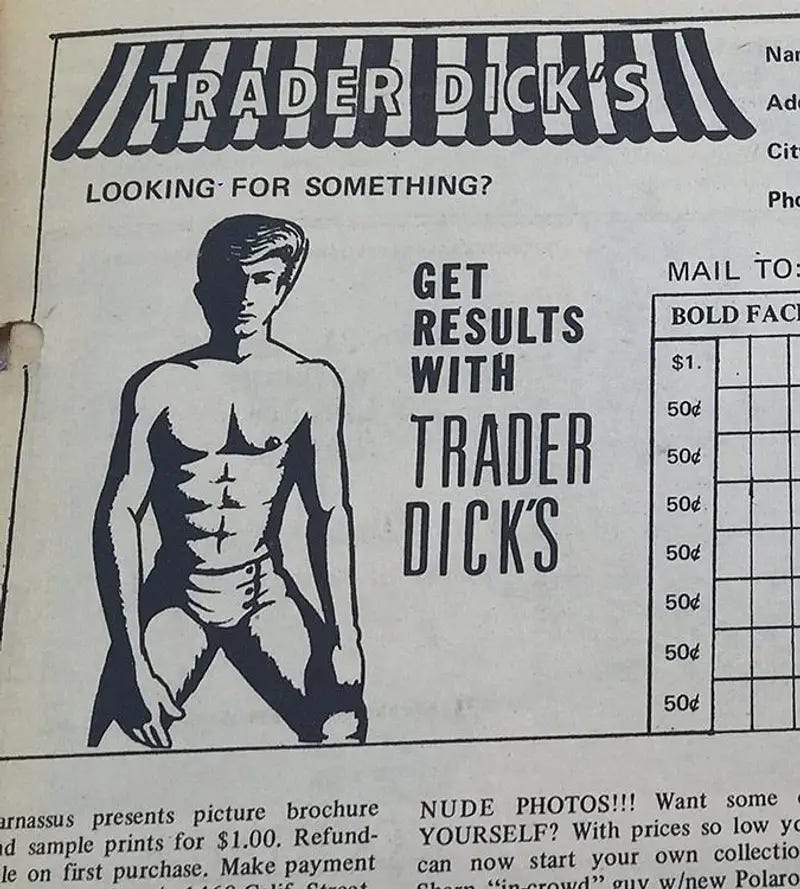
Back before the apps like Grindr and Scruff (the butch moniker signaling this is more a place for masculine men than its predecessor), personal ads regularly read “No fats, no femmes,” alongside a desire for a “straight-acting” guy, whether that ad was for an opera companion, a lunch date, or a fuck buddy. Now those terms and ideas have moved into the digital realm where a salutation from a prospective commonly reads “Sup” (contraction of “what’s up,” not an invitation to dine); even the start of the flirtation is masked with butch vocabulary, a mimic of straight behavior, because straight means masculine, and toxicity is sexy.
Which leads us to the aphrodisiac theme of power, which, in turn, brings us back to toughness, which circles anti-femininity, but in the gay translation power means sex, power means desirability and one that is eternal, despite age and hoped-for maturation. You know how Biden or Schumer couldn’t/can’t relinquish power? It’s like that but with sex, the one place where gays are allowed to flex their power openly, at least with one another. The fear, the dread, is that one day the party will come to an end, that age will wither us, nobody will want us, fucking won’t be the pleasure it once was, and we’ll have to develop – oh, gods – our inner world!
I briefly attended a queer book group in town, which, in many ways, I found charming. I was the oldest person there (a dear friend being my second, but still six years younger than me), and most of the attendants were in their twenties and early thirties. I learned a lot. I laughed more. I often came home bewildered. At the last meeting I attended, we’d read Oscar Wilde’s The Picture of Dorian Gray. For an ice breaker, someone suggested the following question:
“Would you choose like Dorian? Would you stay young and beautiful and stupid forever, or would you choose to grow old, ugly, but wise?”
I thought to myself, “What a boring question. No one’s going to make the same choice as Dorian does. That’s the point of the book – that and a Paterian cris de coeur for an aesthete’s life, but whatever.”
Shocked at how many gay boys chose to retain their looks and lose out on wisdom, finally, it was my turn.
“In some ways, the question is dead in the water for me, because the ship of youth has not only sailed, but sunk. However, knowing myself, remembering the younger version of myself, I’d still choose to grow old and into wisdom.”
Or grow into that fabulous, older queen I’d always venerated as a young person – the type who, growing impatient with the idiotic answers, and upon hearing another twink say in that irritating question voice, “I like who I am now? I don’t know, I mean? I wouldn’t want to change? Because I just want to stay young and pretty forever?”, the type of fabulous, older queen who, before he could reel it back, remarked, “You’ve got a long, disappointing future ahead of you.”
With any luck, that kid will grow up, perhaps even remember his answer to that question and tell it as a joke upon himself, upon the younger fool who thought he could escape the snare of age and change. But it is just as possible, from what I’ve seen from too may gay men, that in another twenty or even thirty years, he’ll still be running the same games, he’ll still be pretending he’s young and gorgeous, he’ll still be getting plowed at a sex club or an orgy or in public bathroom, and so instead of being in on the joke, he is the joke.