
Literary Idiocies
Some bookish thoughts

(Rather listen? Press ‘play’ above.)
To and from my sister’s memorial celebration, sitting on a plane, I honored her in the best way I could: I read. Punctuated by sighs or moments of putting down my book and staring blankly at the clouds below the wing, I fell back again and again into the novel I’d been reading when she died – The Idiot by Dostoevsky. Nothing like the Russians to cheer you up in tough times. (Just ask Chekov.)
Flying across the continent, I had multiple, uninterrupted hours of reading, something not easily afforded in regular life. I was reminded of an enduring image of my sister from about a dozen years ago, when I met up with her and other members of our family on their annual pilgrimage to Cape Cod. We stayed in an old house, whose interior doors had, over the centuries, shifted in vertiginous directions, a carnival lurch accompanied a simple trip to the kitchen. The bathroom necessitated a tip-toe through the room where my sister slept, and once, sometime in the early hours of morning, I stumbled through the doorway, her light still on, as she sat up in bed reading – a mystery, if I recall correctly.
I don’t think we ever spoke of Dostoevsky. I didn’t come to him until sometime in my latter thirties. I picked up Crime and Punishment at a used bookstore and was dazzled by Raskolnikov’s battle between cerebral moral theory and innate conscience. Then, of course, there’s Svidrigailov’s terrifying nihilism, his vision of eternity as a dark closet filled with dust and spiders. So far, I’ve read the book twice.
I read Karamazov, of course, which though I recognized as a fine book, didn’t capture me in the same way, and then there was The Possessed (sometimes translated as Demons), which, for the life of me, I can’t remember a thing about.
But The Idiot? I think it might be Dostoevsky’s perfect work. Although Crime is captivating, and I’ll likely read it again, the end doesn’t satisfy me; it seems as if the author, worried about his antihero’s horrible deed and mental unraveling, needed to redeem him in too obvious a way. But Prince Myshkin, eponymous idiot, a Christ-adjacent figure, finds no redemption, an ending much darker and more satisfying, at least to someone living in 21st-century America. The characters are mesmerizing, more so for the dopplegängers among them, Myshkin/Rogozhin, Nastasya/Aglaya, their undoing the only possible ending but one which, all the same, I hoped against.
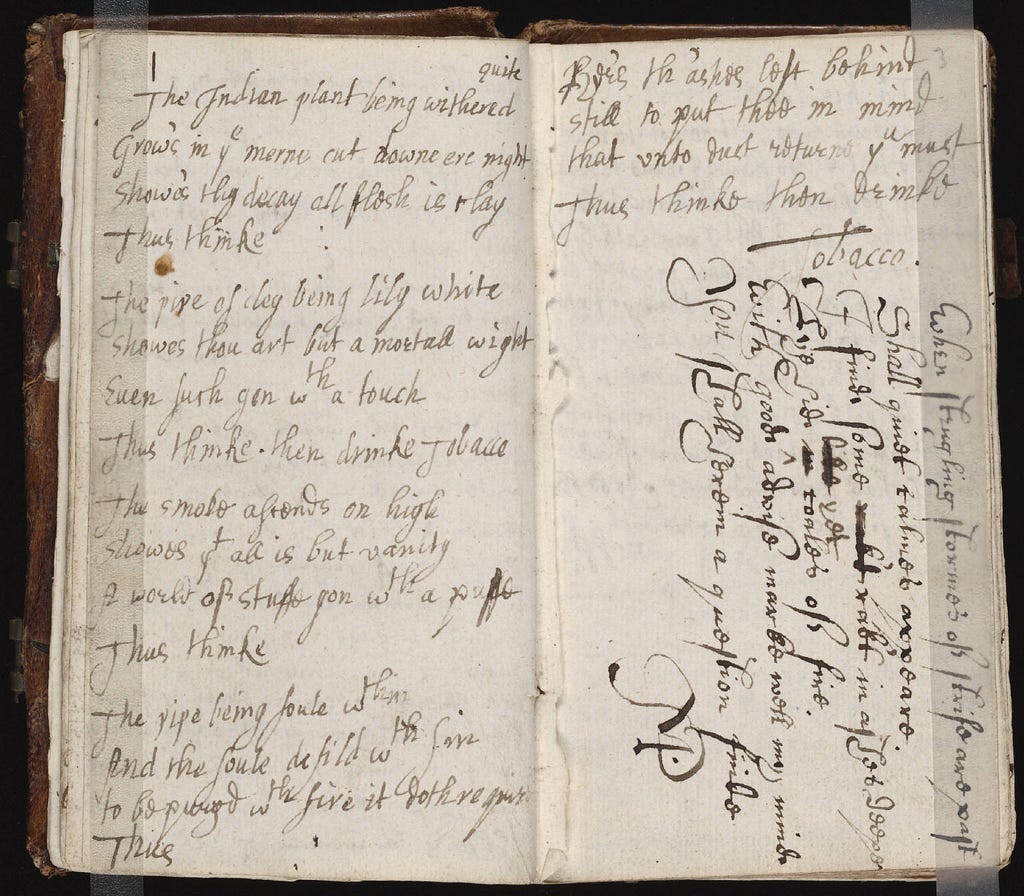
I’ve kept some version of a commonplace book since my teens, scribbling down quotes from what I read alongside whatever psychological and cerebral explorations they lead me to. It’s a way for me to wrangle with what an author does, how the writer does it, and what it awakens within me. I remember some of the earliest quotations, many from Shakespeare as I made my way through a collected works I carried about with me. Lines from King Lear, Hamlet, As You Like It, gave way to quotes from biographies (Katherine Hepburn, Sarah Bernhardt), and novels I read for school (An American Tragedy, Anna Karenina – the Russians again!).
Through my teens, twenties, and thirties, I thought it important to reflect on the personal, each quote a writing prompt given by the inner analyst, but in the waning years of my forties, I’ve grown far less interested in what Ram Dass called the “melodramas” of the personality, in favor of how the literary excerpts reflect life back to me, provide a sense of human condition continuity, or even clarify a philosophical position I’ve noodled but not yet figured out.
From my current commonplace:
“Is it true, Prince, that you once said ‘beauty’ would save the world?”
There’s dark comedy in the idiot proclaiming such a grand possibility – only an idiot would think such a thing but that idiot is consistently praised, while criticized for his goodness and honesty. We mock the fool when he is an optimist, but envy his optimism.
Does beauty save the world, or can it? Keats is evasive. ‘Beauty is all/Ye know on earth and all ye need to know.’ Nothing here about its power to redeem the species. Beauty inspires love in us – love of place, art, experience, even a person – but if that love turns to desire, the beauty hardens into mere sensuality and then greed. The Trojan War is fought for ‘beauty,’ embodied by Helen, but really the beauty is grounds for carnality, an addiction that feeds on itself – a bureaucracy of dopamine.
As Ezra Klein said in a recent podcast, the act of writing, something more and more surrendered to A.I., weaves the mind into complexities whereby it interacts with life in an increasingly rich way. I’d argue this happens with any contemplative act – for some it’s collaging, others it’s cooking, others it’s a walk in nature – a chance to step outside the self and paradoxically deeper into it, not just the petty self, but the more expansive one, the one who sees beyond the everyday and into the larger scope of a lifetime, its concurrent joy and sorrow, hope and despair, peace and rage, all a grand scene in the theater of existence, ultimately a comic one – in that Russian kind-of way.