
Blind Devotion
When a people lose their lineage

(Prefer to listen to my big mouth? Press play above.)
The descendent of the American immigrant is a strange animal. A ferocious pride in their genetic inheritance parades itself in culinary travesties or a zealot’s commitment to observances and obsequies sapped of all meaning. So far from their ancestors’ native land and experience that they sigh wistfully about the old country out of atavistic habit, they rise up with torches and pitchforks should their traditions, for which they have no historical understanding, be threatened by outsiders.
That’s right, kids: It’s Columbus Day and time for my annual dressing-down of Italian Americans.
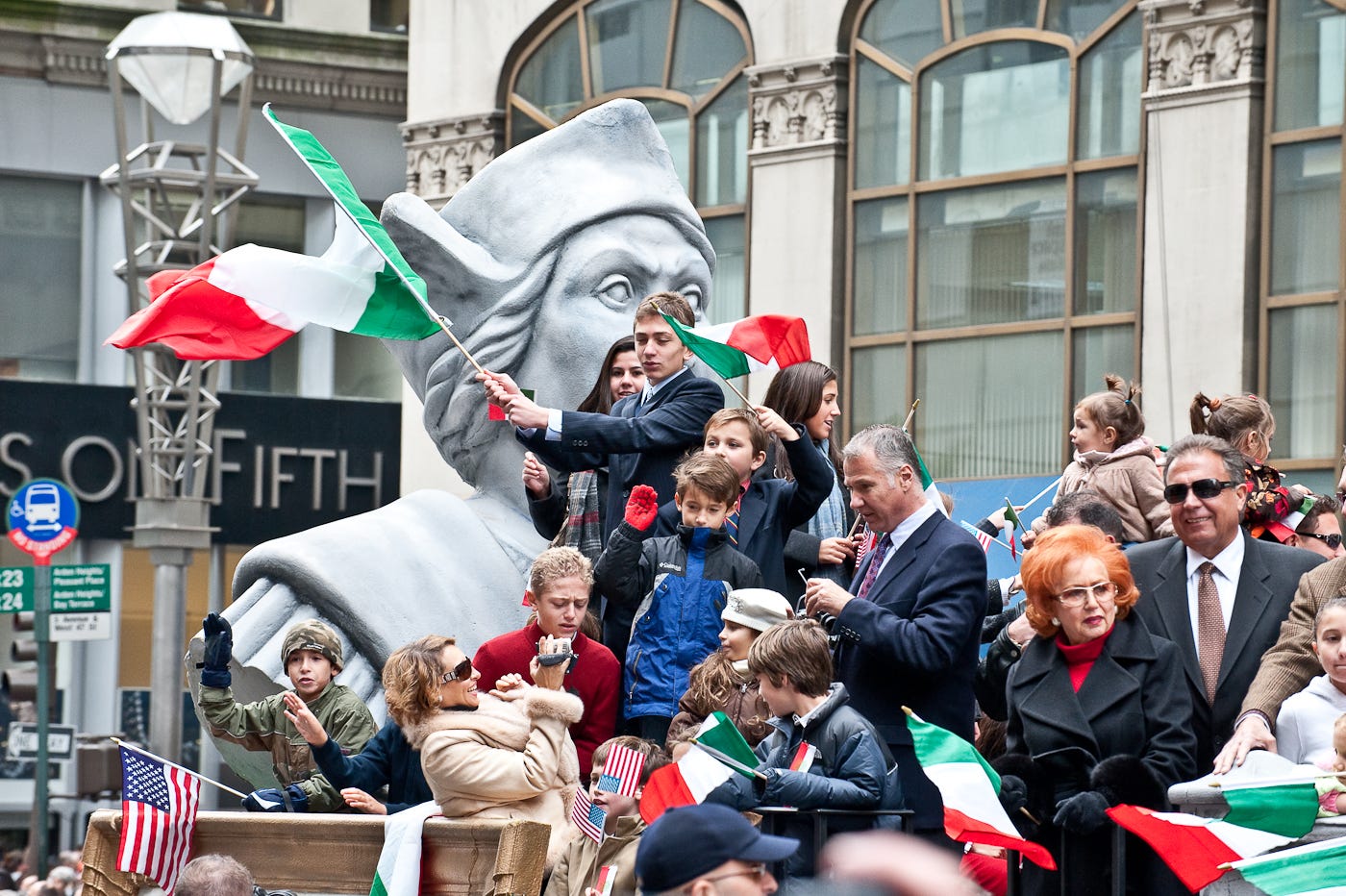
In keeping with this month’s theme of honoring the dead, we’ll explore the living’s betrayal of their ancestors, of people who suffered mightily to come to these (dis)United States, of people who brought with them dreams stained with the mud of the motherland, trampled in the shit of America. Yet, this isn’t just about Italian Americans. It’s about all of us, anyone with European blood in our veins, which is many of us for good and (too often) for ill.
Here in Manhattan, a bacchanal of Italian American myopia begins with the San Gennaro festival in little Italy and ends with the national embarrassment of Columbus Day. Honoring the patron saint of Naples, Little Italy shuts down its streets for a week in September to fête San Gennaro, but also the traditions that remained, the ways of life that, although changed, were not as distant as they are now. With Italians (and mostly those of the Mezzogiorno, the Italian South) pouring into the United States from the late 1800s into the early 1900s, a festival like San Gennaro, a neighborhood like Little Italy, felt urgent.
Today, however, Little Italy is odious. Restaurants serving pasta drowned in “gravy,” chicken “parm” (is there actual poultry under that heap of melted “muzzarell?”), rubbery calamari, and other gustatory offenses line the streets where the tourists traipse, clutching their “Daddy’s Little Meatball” t-shirts (often grown women) or buying key chains and other New York garbage from shops run by immigrants from Asia or India.
(There is one fine exception to this, a place I went into, despite my husband’s protestations. The Italian American Emporium, 155 Mulberry St., is a marvelous, well-curated, artfully-displayed shop with a perfect mix of Italian pride and a kiss of kitsch. We were both charmed.)
A couple weeks ago, on my way to Chinatown, I stumbled into the San Gennaro festival, sponsored, as seen blazoned on banners hung from the corners, by Tulsa King, a show about a mafioso played by a washed-up Sylvester Stallone (redundant?). Booth after booth of foodstuffs lined the streets – tacos, aguas frescas, falafel, kebabs, dumplings, something called Wontonissimo (wontons bloated with red sauce and sausage) – you know, Italian food.
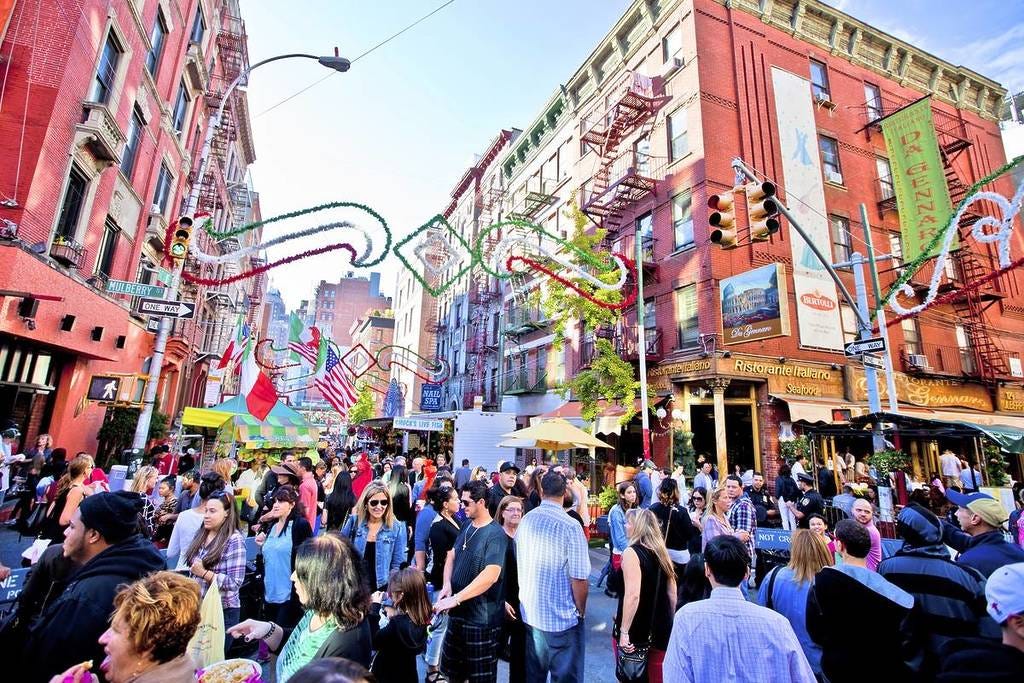
Then there was the goombah garden with pot-bellied, hair-plugged, orange-skinned forty- and fifty-something men puffing on cigars under an arbor of petroleum-derivative grapes, while close by, a graybeard plopped next to a glorified karaoke machine wheezed Frank Sinatra numbers. Women who never left behind their youth, although it fled their flesh decades past, wandered the fair, peering from beneath bangs tortured into spun sugar confections through which glimmered the golden hoops of yore.
How many times did I see the T-shirt with a drawing of a tree on it, its watch cry, “Roots in Italy, Grown in America?”
And then there was this.
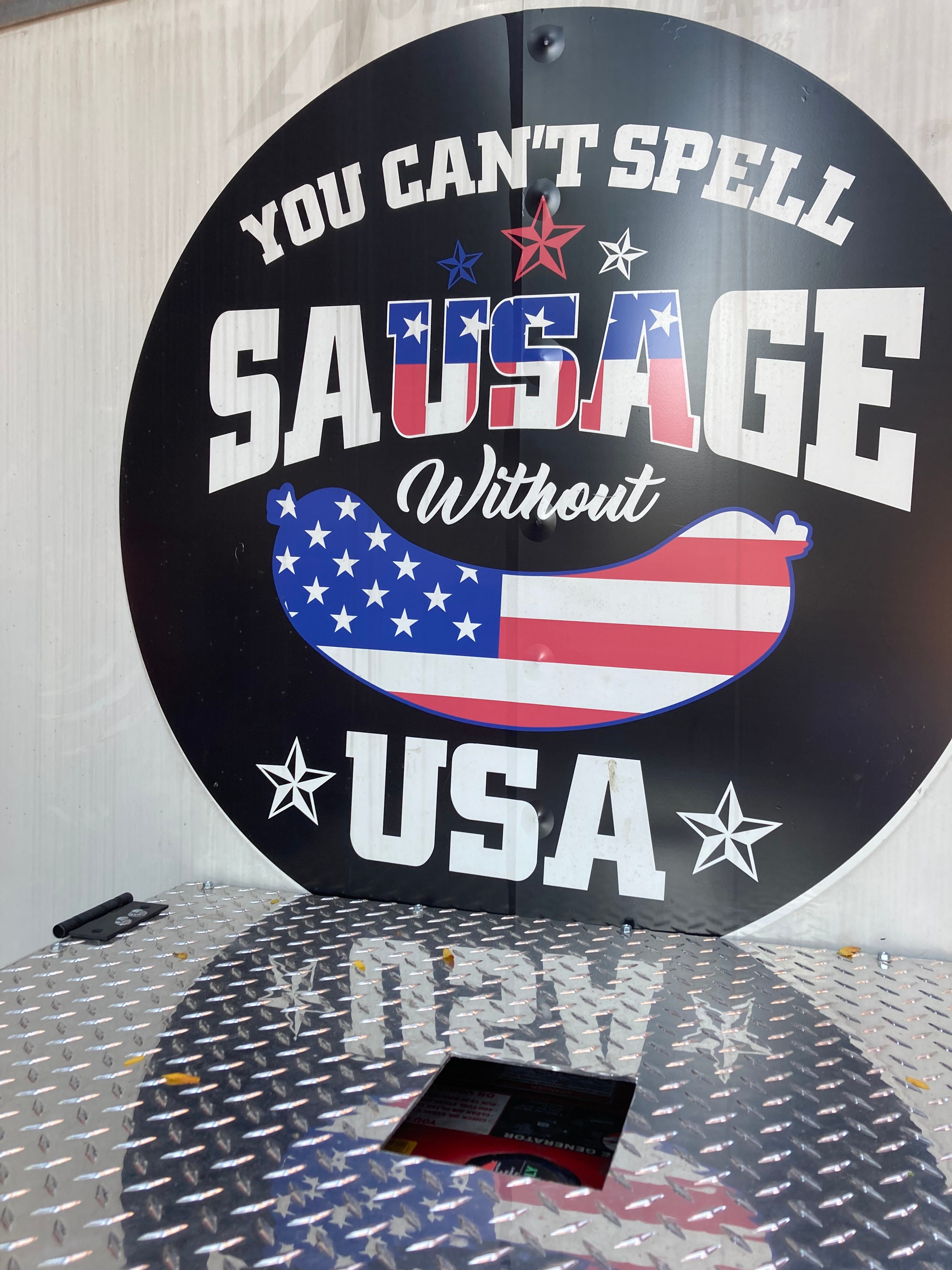
Luckily, the streets were a din, so likely, no one heard me say, “You’ve got to be fucking kidding me.”
Aside from the obvious aesthetic transgressions and ahistorical idiocies, what most rankled was that many of these people are conservatives. They mix Guido pride with American nationalism now that they’ve been accepted into the citizenry with open arms, despite their non-white status when they arrived, an attitude that persisted into the mid-20th century. Because to them being Italian means meatballs and Barilla pasta (my bête noire), they never thought to look at their ancestors, at who they were, what they accomplished, and, more, what they brought with them.
Many of the Italians were socialists. Anarchists. Communists. The unions created by the new arrivals grew from the immigrants’ tried experience fighting the padrone, the feudal overlords of the Italian south. Many of the transplants hated the church because of its depredations, something Mother Cabrini had to overcome when working with Italian immigrants all across the States. Yes, there was an old-world conservatism born of patriarchal village culture, but there was also political radicalism that their descendants today would call “un-American.”
The grandmother of a friend of mine, a woman of Polish descent put it best (and you can insert whatever offensive term for what she said), “Any time a Mick or a Wop gets a hundred dollars in their pocket, they forget where they came from and vote Republican.”
Our relationship with the dead, with the ancestors, with the wisdom of the blood truncated, we fall prey to corporations, to tyrannical government, to religious extremism. When the knowledge of viable elders and the stories of our predecessors, the adventures of our bloodline, is replaced by shallow greatness, by heroic tropes force fed to us by purposefully unconscious movies, articles, and the downright cretinism of social media, we become exactly what we see around us: zombies, ghouls that devour all in their mad consumption for a fulfillment they’ll never attain, because they’re no longer human. Instead of the actual dead, we worship the undead and call it living. We pedestal the influencer and the reality TV star and hope to achieve such heights, without understanding that what we actually need lies under our feet in the soil, in the roots, in the past that is the present and that could be our future.
Whoever you are, this Columbus Day (which I prefer to call Mother Cabrini Day), by all means honor the indigenous folks of your neighborhood (after all, every American without Indian blood lives on stolen land), but go as far back as you can in your own line, follow the warp and woof woven by your grandmothers, dig into the foundation laid by your grandfathers, what traumas have they unwittingly passed on, what resilience, what talents, what weakness, what wisdom of hardship and triumph? Because it’s all there. Far enough back, your people knew the ways of the land, they knew how to plant with the stars, what prayers invoked the Great Mother, what dances healed the babe and freed the woman, what silent gestures warded off the eye, what song coaxed a young man back into the web of life. We need more of that today, more wisdom and less knowing of things, more connection and less connectivity, more internal intelligence and less artificial. We need more of the dead in order to indulge more life.
For those who’d like to join me on pilgrimage to the Black Madonna of Loreto in October of 2026, click here.
This is excellent!
Love this whole thing.