
Beyond the Brits
Goddess worship in the modern age

(Rather listen? Press play above.)
My mother sent me a link yesterday to a Times obit, one of the more reliable sections in a paper that chews its findings to baby food for the masses who, despite that, or perhaps because of it, continue to abandon the Gray Lady:
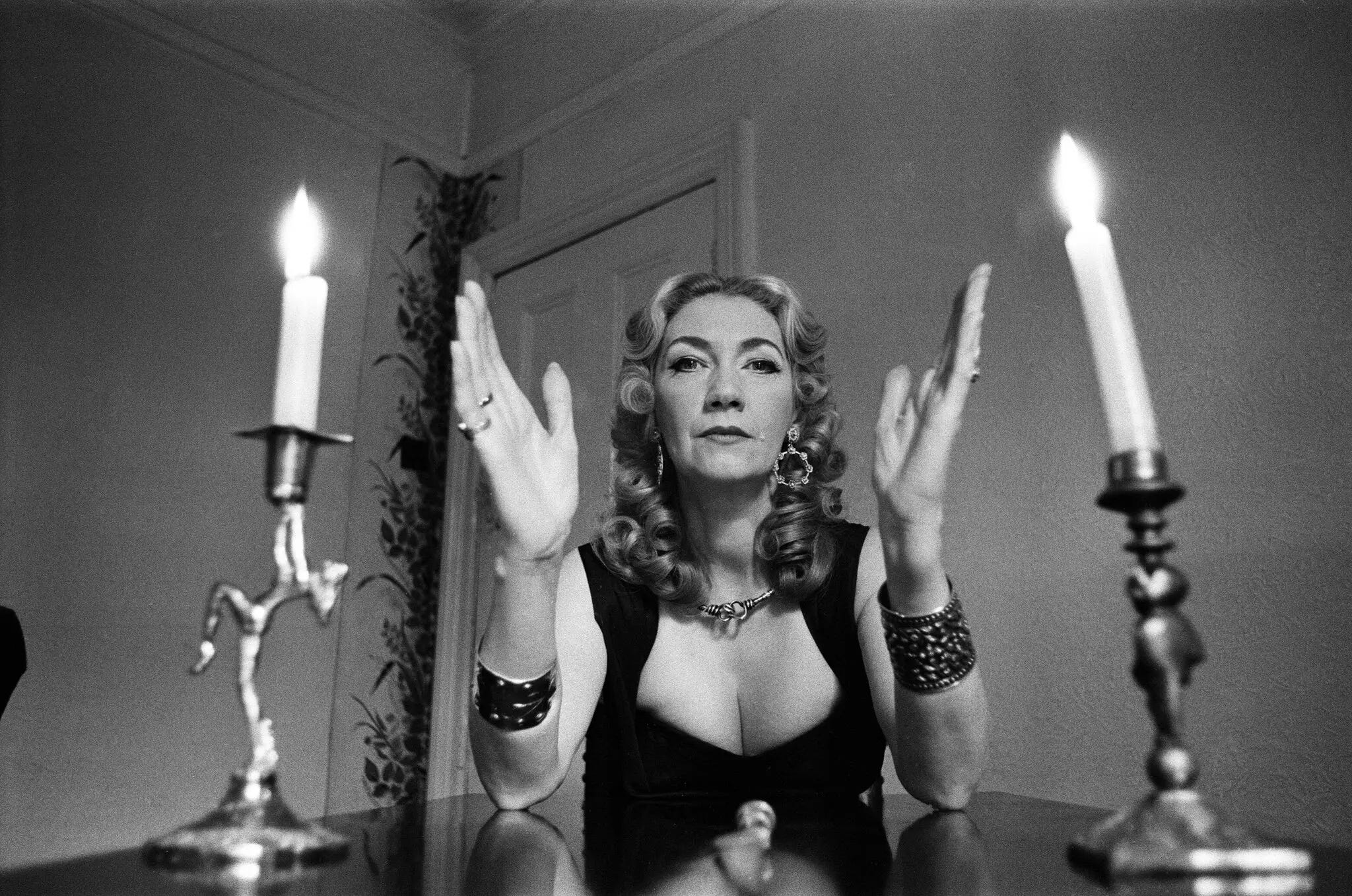
Patricia Crowther, Who Brought Witchcraft Out of the Shadows, Dies at 97
I nearly squealed when doing some cursory research on Crowther. I found an interview she gave to the Guardian in 1990, where she claimed that a group of witches performed a ritual to keep Hitler from invading Britain in 1939. Naturally, I thought of Bedknobs & Broomsticks, my favorite witch film, and Angela Lansbury’s magical victory over the Nazis who’d skulked onto England’s shores.
During a lifetime of activism and practice, Crowther professed that restoring the goddess figure to modern life was an important antidote to the patriarchal chokehold throttling the world. She was initiated into “the craft of the wise,” as she called it, by none other than Gerald Gardner, who brought British “wicca,” a modern fabrication of alleged ancient practices, into the public eye during the mid-twentieth century. Anyone who’s even dabbled in the pagan arts has likely run across his work and the rites he details. There’s a dash of the mountebank in Gardner, more than a helping of homophobia and misogyny, and perhaps a hefty side dish of creeper, but you can’t deny he left a long shadow on modern earth-centered spiritualities.
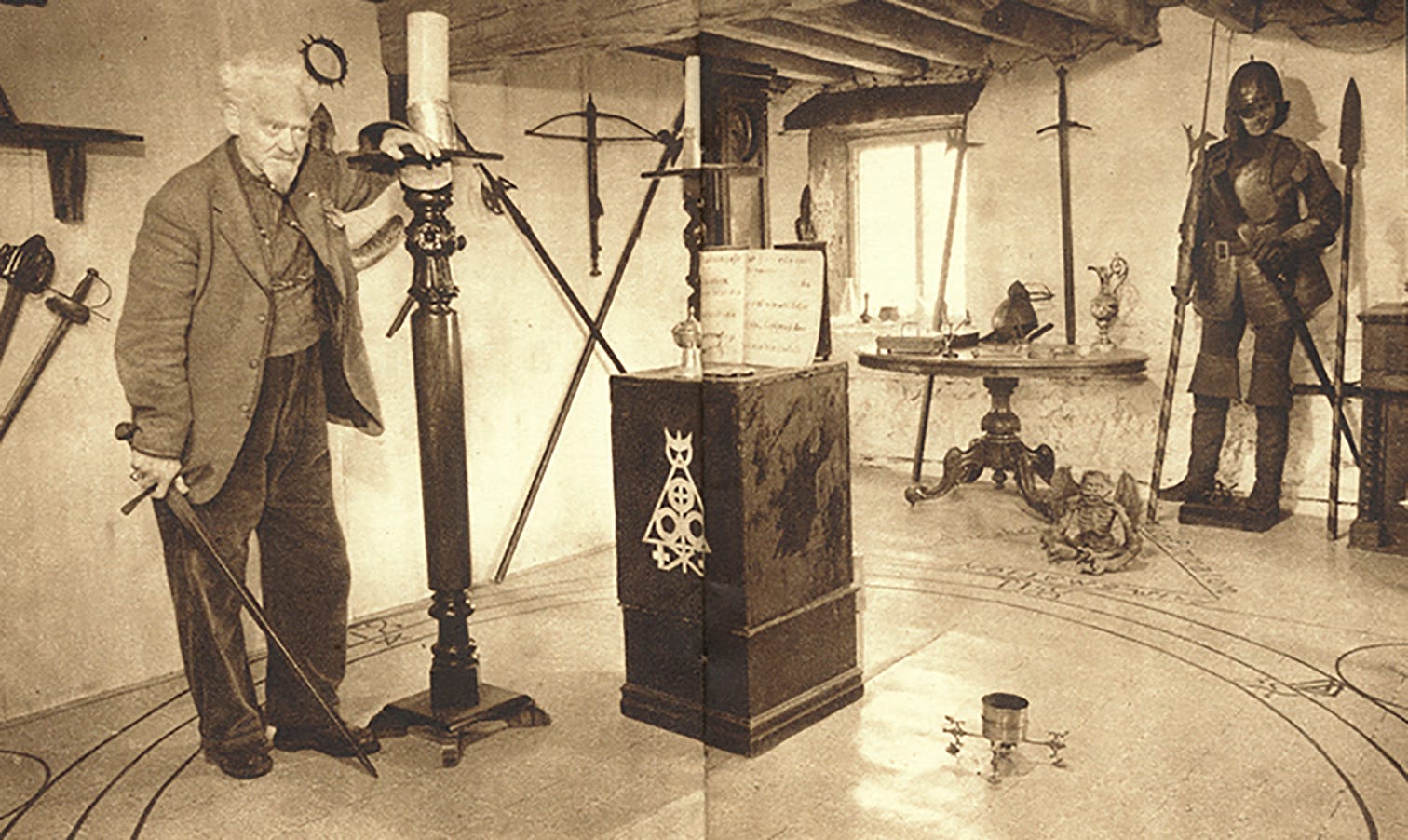
When I first flirted with the whole witchy life in my teens, Gardner and his descendants, conscious and otherwise, were everywhere – their books, their teachings, their merch. A Ren Faire atmosphere prevailed, replete with cloaks, covens, sacred daggers (“athame,” if you’re in the know), herbs hung in bundles by the backdoor, and other trappings of “ye olde wayes."
Luckily, after going to a Reclaiming style-witch camp, I met my mentor (whom I’m waiting to see now, sitting at LaGuardia airport about to board a flight to Minneapolis); he exposed me to a vast world of spiritual practices, well-researched, and anything but British. Don’t misunderstand me, pre-Christian British paganism is rich, fascinating, and full of depth, but the 20th-century version wanted Dionysian élan. Drawn largely from Rosicrucianism, Theosophy, and Aleister Crowley, Gardnerian Wicca often declaims a Cecil B. DeMille formality where one would be forgiven for wondering if they’d wandered into an Anglican service.
My mentor’s teachings and my own curiosity lead to an exploration of the Dark Goddess, the Black Madonna, in her various forms – Auset (Isis, in the Greek), Cybele, Venus, Freya, Kali – a goddess often left out of that mid-century pagan revival, only starting to creep in slowly in the last quarter of the century. Along with that has come a return to practitioners’ roots (Italians, Caribbeans, Greeks, Turks, Irish, and yes, Brits), an embrace of the ecstatic, and a long overdue apprehension that the sacred and the profane are not separate realms, because when you relate to the Divine Feminine as the earth, the mud, the hurricane, the sidewalk, the hamburger, as everything in life, all of existence reveals itself as magical.
When I was a yoga teacher, whenever I talked about tantric ideas (which is NOT the ability to have sex for 11 hours – Christ, go feed your dog, talk a walk, better yet, take a shower), I’d say that the tanrtikas, the practitioners of that style of yoga/Hinduism, took the basic Indian idea that all things are God and went for broke. If all things are the divinity, that means all, that means that whatever is declared unhallowed by a bureaucratic religion is as much a sacrament as the the yagna, the sacrificial fire. In India, this meant certain practices; in the west we could streamline that to, “God is the dog shit on the sidewalk and the beautiful woman in a Chanel suit stepping over it.”
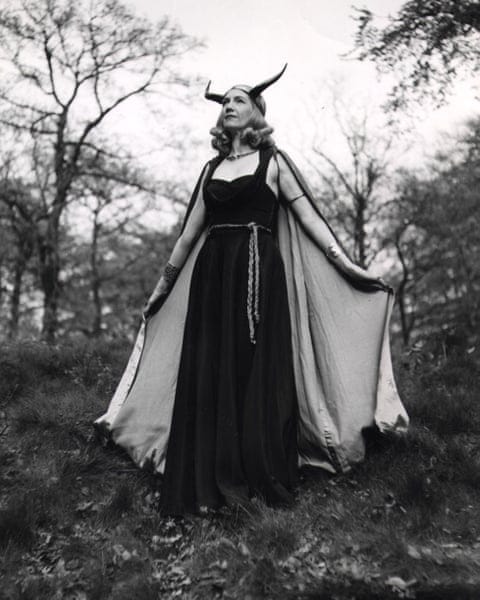
The Great Mother is the Gerald Gardner of it all with his retrograde attitudes on women and the gays, and She’s also the Patricia Crowther of it all who showed up in BBC programs and in newspapers glammed up like a British Venus, who danced in rituals until her health gave out completely in her final years. The Dark Goddess – dark as the cosmos is dark, dark as soil is dark, dark as the unconscious where dreams swim – embraces the Gardner and the Crowther, holds close to Her bosom whatever we exalt and whatever we rebuke, because beyond all human order, beyond degrees of initiation, beyond ritual formulate, there is only one “priestess” – the Dark Mother, whose most potent rite is life itself.
For those who’d like to join me on pilgrimage to the Black Madonna of Loreto in October of 2026, click here.
Bless you for that well-deserved dig at the NYT.